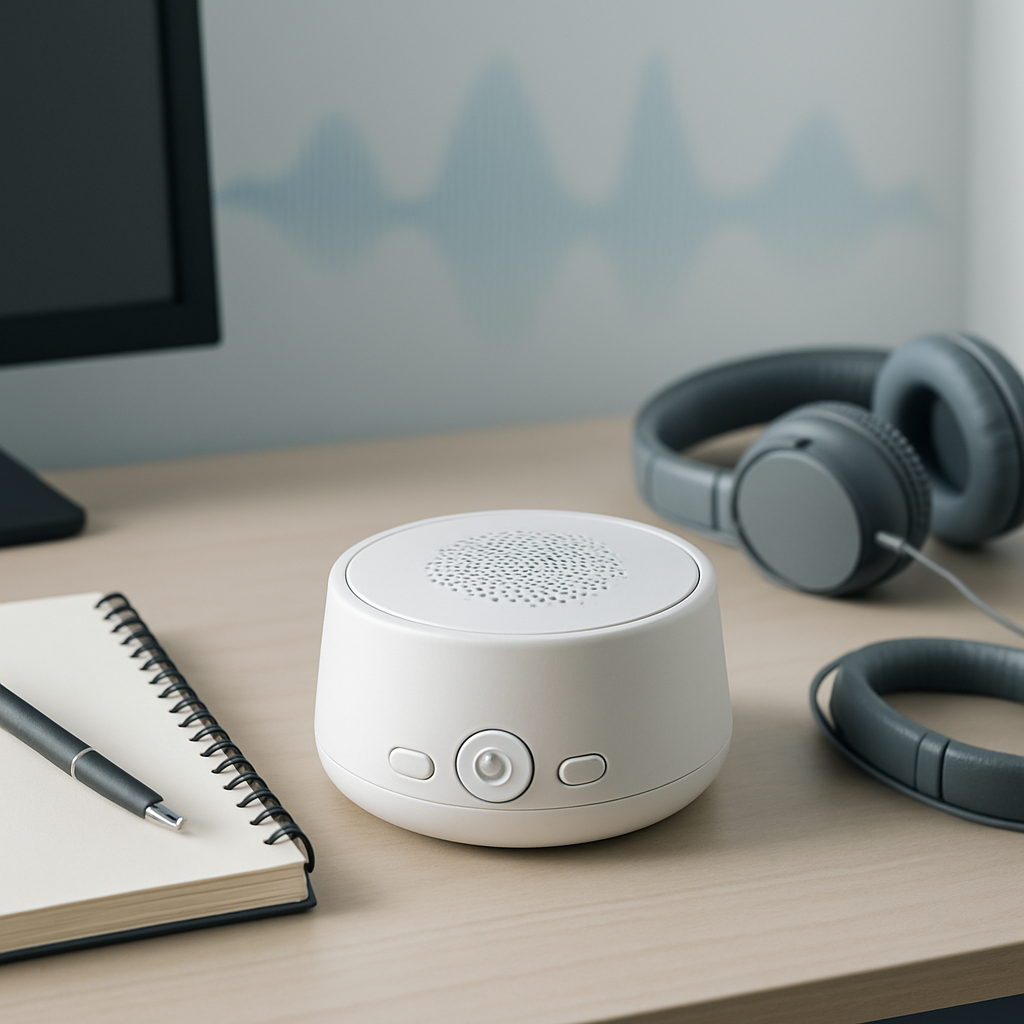
Choose sound character before brand
White noise, pink noise, brown noise, fan sounds, nature loops, and office masking tones feel different during focus work. The best machine is not simply the loudest one; it is the one that blends into the room without becoming another distraction.
For product picks after this room check, use the LeStallion guide to 7 Best White-Noise Machines for Improved Focus.
Use volume range carefully in shared spaces
A focus machine should cover distractions without forcing coworkers to listen to it. Volume range, speaker quality, and placement matter more than maximum output. Start low and raise only enough to soften background chatter.
Keep this choice tied to the real room, real distractions, and comfortable volume.
Think about privacy without creating noise clutter
White-noise machines can help reduce intelligible speech at a desk or therapy room, but they do not replace real privacy practices. Placement between the listener and distraction usually matters more than pointing sound directly at the user.
Keep this choice tied to the real room, real distractions, and comfortable volume.
Check timer and memory settings
Timer and memory features make a machine easier to use. If the device remembers the preferred sound and volume, it becomes a simple work habit. If it resets loudly every time, it can become annoying.
Keep this choice tied to the real room, real distractions, and comfortable volume.
Plan power, portability, and desk cable paths
A compact unit still needs a safe place to sit and a cable or battery routine. It should not crowd the keyboard, block notes, or add messy wires to a clean desk.
Keep this choice tied to the real room, real distractions, and comfortable volume.
Compare product picks after defining the room
Once the sound type, volume level, placement, power, and timer needs are clear, a product shortlist becomes much easier to use. The goal is calmer focus, not louder background noise.
Keep this choice tied to the real room, real distractions, and comfortable volume.
A focus test before buying
Before choosing a machine, identify the exact distraction. Office chatter, keyboard clicks, HVAC hum, street noise, and sudden hallway sounds need different masking strategies. A steady fan sound may help with speech, while a nature loop may be too noticeable during reading or writing.
Test with headphones off and normal work open. If the sound pulls attention toward itself, change the tone before increasing volume. The best focus sound fades into the background after a few minutes.
Also consider coworkers. A machine that helps one desk may bother the next desk. In shared offices, use the lowest useful volume and place the unit close enough to the listener that it does not fill the whole room.
Common mistakes with white-noise machines
The first mistake is using volume as the only solution. Louder masking can become a new distraction and may make the room feel more stressful. The second mistake is choosing novelty sounds that loop obviously. A short repeating track can be worse than the noise it hides.
Another mistake is ignoring placement. A unit tucked behind a monitor may sound muffled, while one aimed directly at a person may feel harsh. Small changes in position can make the same machine more useful.
The best machine is steady, simple, adjustable, and easy to turn into a repeatable focus habit.
One-week evaluation plan
Use the same sound and volume during similar work blocks for several days. Track whether focus improves, whether the sound becomes annoying, and whether anyone nearby notices it. Good settings should feel almost invisible.
Try a shorter timer during deep work and a lower volume during light admin. If one setting works for every task, keep it simple. If different work blocks need different sounds, choose a model with memory or easy controls.
At the end of the week, keep the sound that reduces interruptions without creating a new habit to manage.
Final setup note
As a final note, write down the sound type, volume level, placement, and work block that felt best. That small record makes it easier to repeat the setup instead of changing settings every day.
For shared offices, ask whether anyone nearby noticed the sound before mentioning it. Unprompted reactions show whether the machine is subtle enough for routine use.
Deep-dive subpages
How to avoid over-masking the room
White-noise machines can help focus, but they should not turn a calm room into a louder room. The practical goal is masking the edges of distracting sound, not covering every noise completely. If the machine has to be very loud to work, the real issue may be desk location, room acoustics, door gaps, or conversation habits rather than the device itself.
Start with the machine close to the listener and low in volume. Move it a few inches at a time before changing the sound type. Corners, shelves, monitor stands, and fabric surfaces can change how the same tone feels. A sound that feels harsh beside the keyboard may feel softer on a side table.
For offices, keep expectations realistic. A machine can make speech less crisp, soften sudden interruptions, and create a more consistent background. It should not be used to hide genuinely confidential conversations or replace meeting rooms, privacy policies, or considerate office etiquette.
What to check after the first few days
After several work sessions, ask whether the machine made starting focused work easier. The best sign is not excitement; it is forgetting the sound is there. If the user keeps changing volume, skipping the timer, or noticing loops, the setting needs refinement.
Check whether the sound helps at different times of day. Morning traffic, lunch chatter, afternoon meetings, and evening quiet may need different levels. A machine with memory settings or simple controls makes these changes easier to handle without turning the device into another task.
Finally, check the social fit. If coworkers mention the sound unprompted, lower it or move it closer to the user. A focus tool should improve the workday without claiming the room.
Related office aroma page
This cluster follows the previous GitHub Pages guide on essential-oil diffusers for office aromatherapy. For product-level white-noise picks, return to the LeStallion white-noise machine guide.